
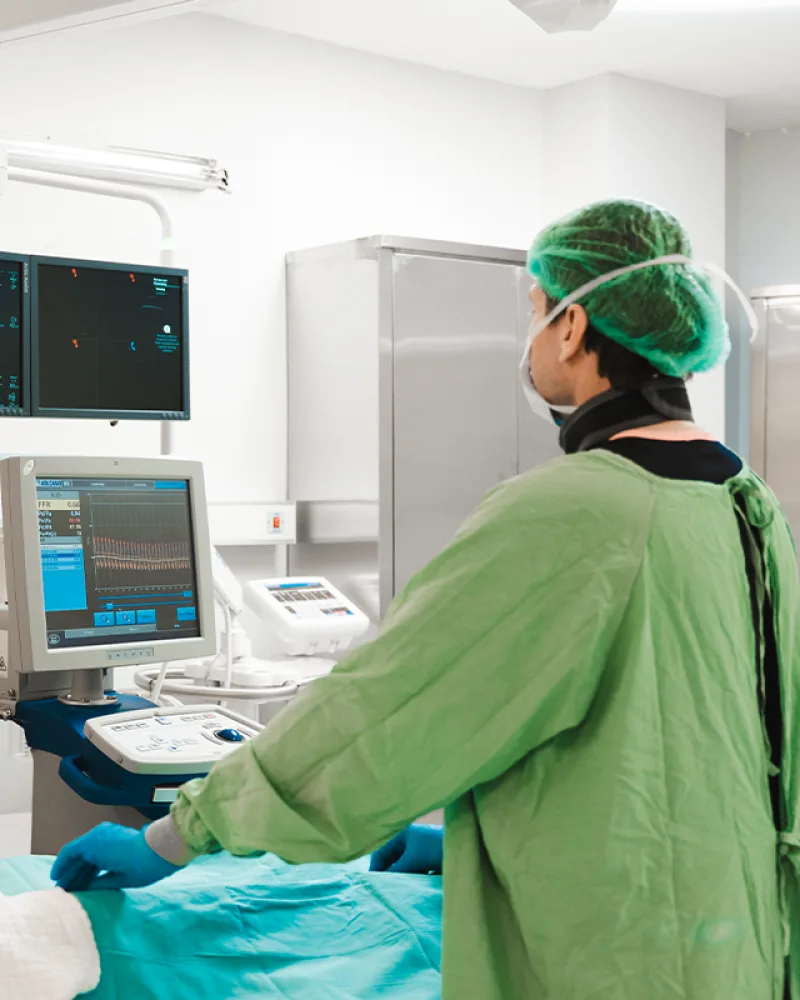
FFR Measurement
Is the narrowing really restricting the blood flow? The pressure measurement behind a stent decision.
![[Örnek içerik] Ana sayfa slayt görseli.](https://drumuttandogan.com.tr/storage/media/1920x1080/demo-slayt-tanitim.webp)
Coronary artery, heart valve and rhythm disorder treatments, from the diagnosis to the procedure; at Antalya American Hospital and at the clinic in Konyaaltı.

About
Cardiologist
Prof. Dr. Umuttan Doğan is a cardiologist with more than twenty years’ experience. His work is on treating narrowed heart arteries, heart valve disease and rhythm disorders with a catheter. He spent 18 years as a faculty member at Selçuk and Akdeniz universities. Today he sees patients at Antalya American Hospital and at his clinic in Konyaaltı.
Treatment of coronary artery disease, valve disease, rhythm disorders and pacemaker therapy at Antalya American Hospital and at the clinic in Konyaaltı.
Treating narrowed heart arteries with angiography and stents. FFR and IVUS at the decision stage, IVL and CTO techniques for calcified or long-blocked vessels.
Coronary Interventions →Finding the source of palpitations and rhythm disorders with 3D mapping and treating it with ablation. RF, cryo and PFA in atrial fibrillation and extrasystoles.
Rhythm Disorders and Ablation →Treating narrowed or leaking valves and holes in the heart without opening the chest: TAVI, TEER, balloon valvuloplasty, ASD/VSD and prosthetic valve leak closure.
Heart Valve Treatments →Pacemakers for a slow rhythm, including leadless and physiological options. CRT in heart failure, and an ICD (implantable defibrillator) where there is a risk of a sudden rhythm disorder.
Pacemakers →Treating narrowed arteries in the arms and legs with a catheter; balloons, drug-coated balloons and stents above and below the knee.
Peripheral Vascular Interventions →IVUS, which shows the vessel from the inside, and intracardiac echocardiography (ICE), which shows the heart from the inside, for a clearer decision before and during a procedure.
Diagnosis and Imaging →
Is the narrowing really restricting the blood flow? The pressure measurement behind a stent decision.
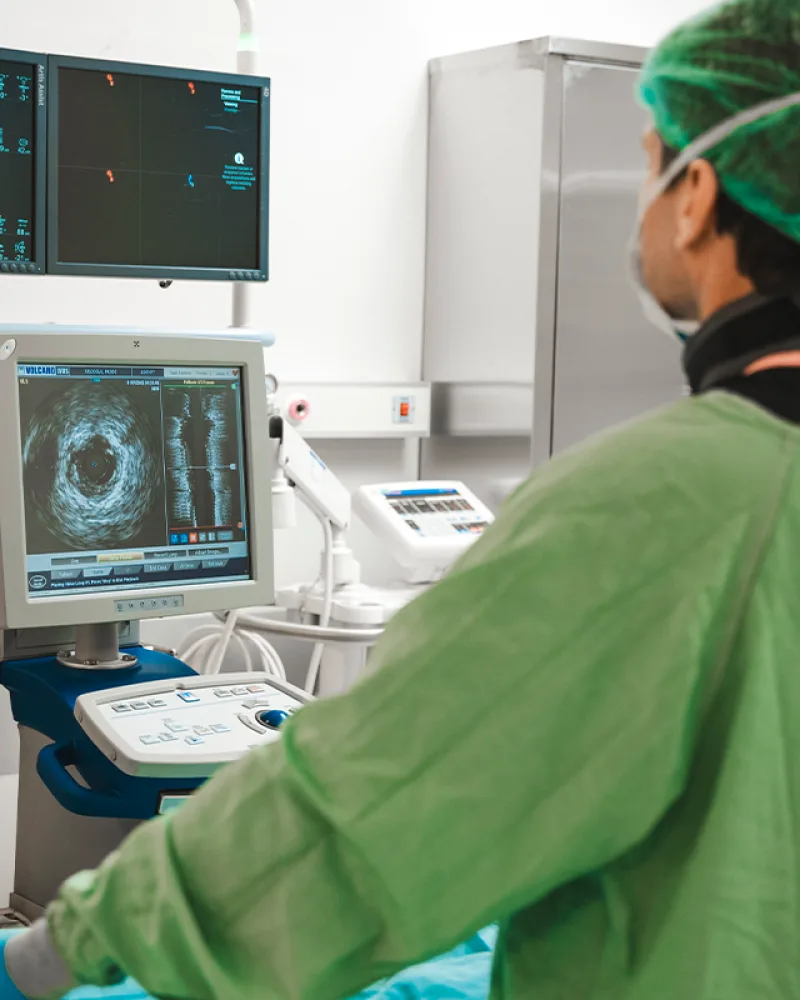
Imaging the inside of the artery with ultrasound to settle the right size of stent.
![[Örnek içerik] [Örnek görsel] IVL: Kireçli Damar Tedavisi görseli.](https://drumuttandogan.com.tr/storage/media/800x1000/demo-kart-ivl.webp)
Cracking hard layers of calcium with shock waves to prepare the artery for a stent.
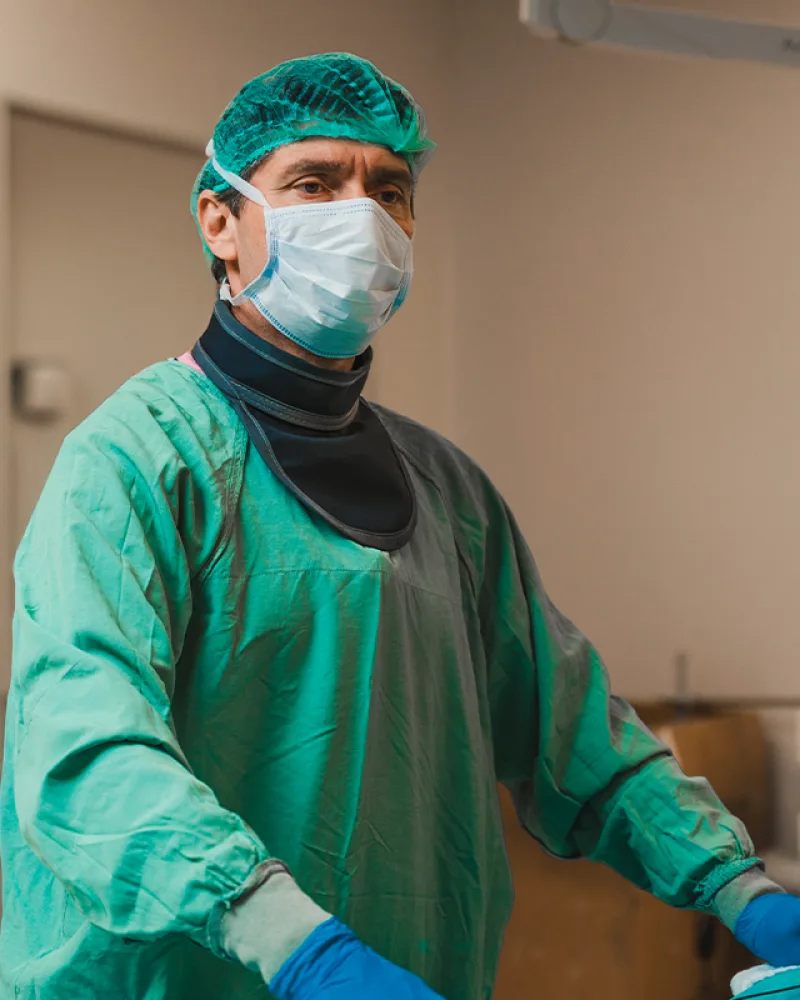
Opening coronary arteries that have been closed for months, with special wires and microcatheters.
![[Örnek içerik] [Örnek görsel] TAVİ: Aort Kapak Darlığı Tedavisi görseli.](https://drumuttandogan.com.tr/storage/media/800x1000/demo-kart-tavi.webp)
Placing a valve through a catheter in aortic stenosis, without opening the chest.
![[Örnek içerik] [Örnek görsel] TEER: Mitral ve Triküspit Kapak Kaçağı görseli.](https://drumuttandogan.com.tr/storage/media/800x1000/demo-kart-mitral-ve-trikuspit-teer.webp)
Reducing a valve leak through a catheter, by bringing the edges of the valve together.
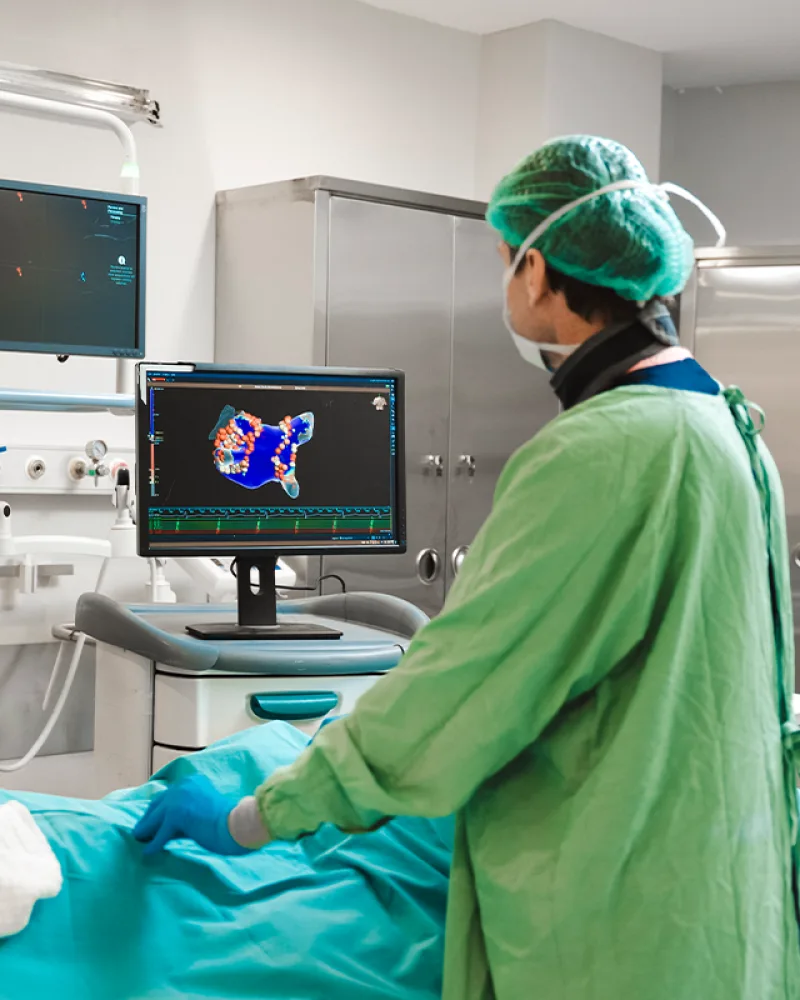
Treating atrial fibrillation with ablation, guided by three-dimensional mapping.
![[Örnek içerik] [Örnek görsel] Kablosuz Kalp Pili görseli.](https://drumuttandogan.com.tr/storage/media/800x1000/demo-kart-kablosuz-kalp-pili.webp)
A pacemaker placed directly in the heart, needing no lead and no pocket under the skin.
Your treatment in Antalya runs in six steps, from your first message to the follow-up once you are back home.
Write to us on WhatsApp, by e-mail or through the contact form, and tell us briefly what is troubling you and what you are hoping for.
Send the tests, imaging and reports you already have; Prof. Dr. Umuttan Doğan goes through them.
In an online consultation you are told which tests or procedure are suggested and how long the hospital stay would be.
The dates of the consultation and the procedure are set together, and you plan your travel and your stay in Antalya around them.
After the consultation and any tests needed in Antalya, the planned procedure takes place at Antalya American Hospital.
You are given your follow-up plan on discharge; once you are home we can go through your results by e-mail or in an online consultation.
The questions we are asked most about appointments, consultations and travelling from abroad.
You can call +90 533 705 65 83, write on WhatsApp at the same number, or fill in the form on the contact page. For a consultation at Antalya American Hospital you can also use the hospital appointment line, 444 9 113.
He sees patients in the Cardiology department of Antalya American Hospital (Çaybaşı Mah., Muratpaşa) and at his clinic in Konyaaltı (Arapsuyu Mah. Atatürk Bulvarı, M. Gökay Plaza).
Bringing your ID, any earlier ECG, echocardiography, exercise test and blood test results, angiography recordings (on CD) and discharge reports if you have them, and a list of the medicines you take, makes the assessment easier.
You send your reports first, by WhatsApp or e-mail; after they are reviewed you are told about the treatment plan, the length of the hospital stay and the estimated cost in an online consultation. The dates are set together, the consultation and the procedure take place in Antalya, and your follow-up continues online once you are home.
Yes. You can send your test results and reports by WhatsApp or e-mail. Please do not attach health information or reports to the contact form; the form is only for getting in touch.
Consultations can be held in Turkish and English; for German, letting us know beforehand is enough.
Did not find the answer to your question? Write to us
Heart Health
A heart murmur is an examination finding, not a diagnosis. How an innocent murmur is told apart from valve disease, and what the grade in your report describes.
Heart Health
The feeling of a skipped heartbeat is rarely the sign of a serious illness. But some features of it need looking into. Which ones, and how the decision is reached.
![[Örnek içerik] [Örnek görsel] Anjiyoda Sınırda Darlık Ne Demek? görseli.](https://drumuttandogan.com.tr/storage/media/1200x800/demo-yazi-sinirda-darlik-ne-demek.webp)
Treatment Process
The percentage of a narrowing seen on an angiogram does not say whether it is really reducing the blood flow to the heart. How the decision is reached in borderline coronary narrowing.
Appointments and contact
You can call, write on WhatsApp or send your reports by e-mail. If you are writing from abroad, we will plan the dates together.